Search “2026 tech trends” and you often find yourself buried in technical jargon or confusing charts. You encounter endless corporate buzzwords that fail to explain what is coming. But what you really want to know is quite simple.
What is actually going to change for you, your work, and your daily life over the next year or two? That is the question that matters most.
2026 tech trends are not abstract ideas found only on a slide deck. They are the quiet forces already shaping how you shop, work, and learn. They influence how you protect your data and even how you watch Netflix at night.
Table Of Contents:
- The Big Shift Behind 2026 Tech Trends
- How AI Grows Up in 2026
- The New Hardware Arms Race Underneath It All
- Security, Privacy, and Trust: The Quiet Battle of 2026
- Physical AI, Spatial Tech, and The Edges of Daily Life
- Energy, Climate, and The Cost of All This Compute
- Consumer Tech In 2026: What You Actually Touch
- How to Position Yourself for 2026 and Beyond
- Conclusion
The Big Shift Behind 2026 Tech Trends
Over the past five years, tech has gone from something distant to something wrapped around almost every decision we make. It affects everything we do.
Think back to the early days of the COVID pandemic. That shock created a hard push into digital transformation tools across every part of life.
Now we are in a second wave of this shift. AI, chips, and connectivity are moving from quick fixes into long-term structure. This creates a rapidly changing environment for everyone.
Analysts like Gene Alvarez and Tori Paulman at Gartner argue that this year is a tipping point. Their 2026 list is not just about shiny ideas. It focuses on the tools CIOs lean on to keep their companies alive.
Business leaders are looking for stability in a messy environment. They need to find ways to move forward without breaking their budget. This is where enterprise strategy becomes vital.
How AI Grows Up in 2026
A year ago, we were still laughing about how AI could not even count the letters in the word strawberry. The vibe was skeptical. Many people said they would not bet their business on this.
Now that attitude feels dated and behind the times. By late 2025, companies moved from AI experiments to full production rollouts.
In 2026, AI becomes part of the basic stack rather than a toy on the side. AI adoption is no longer optional for major players. It is a requirement to stay in the game.
So what changes for you?
Generative AI is evolving into something more functional.
Let us break down the biggest AI patterns you will feel directly.
1. AI native development: software builds itself more often
One of the big items involves a change in software engineering.
Instead of humans writing every line of code, developers describe what they need. AI systems then sketch, test, and refine the software. This allows teams to unlock breakthroughs in speed.
Think of it as moving from writing everything from scratch to co-directing a very fast coder. The AI acts as a patient partner. This helps companies scale AI development without hiring endless staff.
For businesses, this means features roll out faster. For you, apps update more often and feel more responsive to feedback. Bugs will still slip through, but the cycle of “idea to live product” keeps shrinking.
2. Multi-agent AI: your tools talk to each other
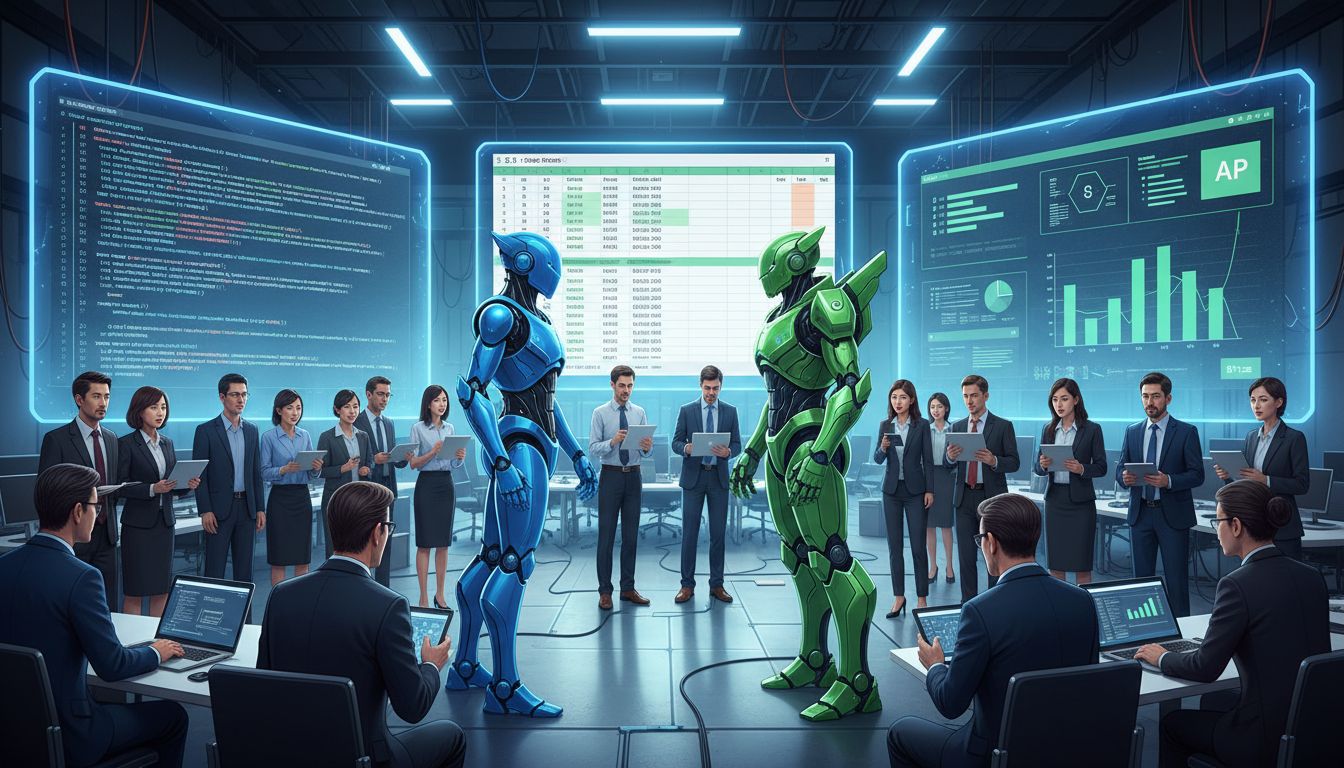
Another core 2026 shift is the rise of multi-agent AI systems. Instead of one large model doing everything, you get a small crew. These AI agents act as a team.
Each AI agent has a specific job to do. They talk to one another to complete complex tasks. You already see the early pieces of this through new protocols like ACP.
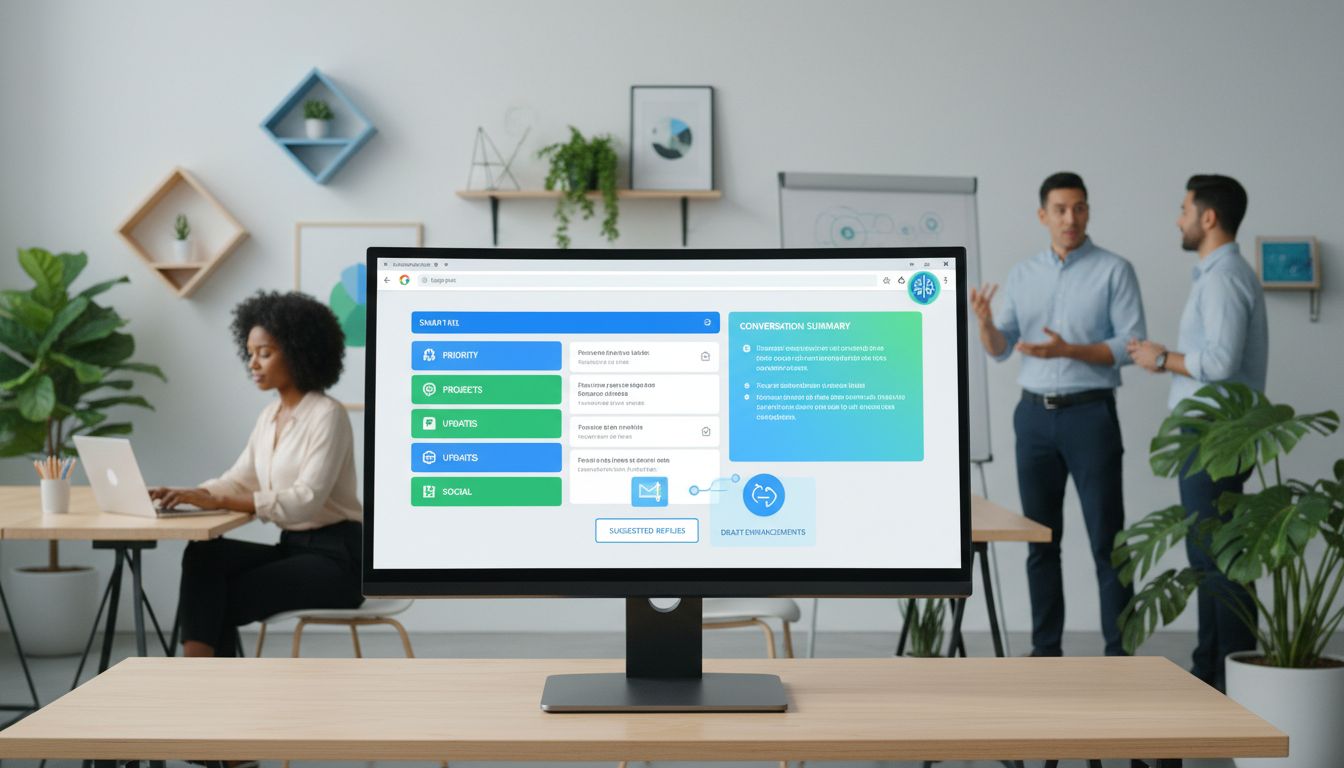
Translation: your tools will coordinate without you doing manual copy-paste all day. Your agentic AI writing tool will speak to your calendar. It will also connect with your CRM and inbox seamlessly.
3. Domain-specific models: smaller and smarter for narrow jobs
You have probably noticed that the big headline AI models try to be good at everything. But 2026 is the year the smaller specialists break through in a bigger way. This impacts the competitive landscape significantly.
Gartner calls these domain-specific language models. We see strong proof of this already. IBM’s Granite models are tuned for business and transparency.
AI2’s Olmo 3 aims at high-quality open source research use. Chinese lab models like DeepSeek R1 focus hard on reasoning. This AI maturity allows for better results.
What does that mean for your daily tech stack? Expect more “AI inside” that feels specific to your task. This applies whether that is contract review or customer service.
It also changes how a phone job in a call center functions. Less general chat occurs. You get sharper help on exactly what you are trying to do.
The New Hardware Arms Race Underneath It All
You can not talk about AI growth without looking under the hood. Models are hungry. They are pulling on the global supply of chips and memory.
This demand surprises even people who have watched tech trends for years. The AI market is devouring resources.
In 2025, demand for AI chips grew very quickly. It outran the supply chain in many areas.
New data centers and model training pulled in massive amounts of hardware. Traditional buyers, from gaming to research, felt squeezed.
There are clear signs of this in the memory market as well. AI-driven data centers are absorbing huge slices of RAM output. This pushes prices higher across the ecosystem.
This has real effects for consumers. Smaller companies find high-performance gear more expensive. Shipping times for an AI vendor may also slow down.
AI supercomputing platforms become core infrastructure
Because of that crunch, AI supercomputing platforms are essential.
Compute, networking, and storage are all tuned to one main job. They run and train heavy models. This is what AI supercomputing is all about.
For most people, you never see this hardware directly. But you feel its impact when models answer faster. It also helps when systems handle longer documents.
They run inside your company firewall instead of only in a shared public cloud. It is a quiet race in the background. It is similar to the early cloud days.
Now the stakes touch every knowledge worker. It affects every streaming service and support center. It drives the global technology engine forward.
WiFi 8 and the push for smoother connections
Better AI is pointless if your home or office network crawls. That is why connectivity got a spotlight at the big gadget show in 2026. Network operators are paying close attention.
Broadcom announced a new APU called BCM4918. They also released radios ready for next-gen WiFi 8 routers. MediaTek rolled out its Filogic 8000 family to support devices on this standard.
Mobile network operators are also upgrading their infrastructure. While most of us just complain that “the internet feels slow,” there is more to it. Under that feeling sits a tight link between dense AI traffic and the pipes trying to keep up.
2026 marks the start of your router being built for this new flood of data. Your favorite apps will rely on this mobile network strength by default. It is a necessary upgrade.
Security, Privacy, and Trust: The Quiet Battle of 2026
As soon as tech moves fast, bad actors follow. You can see why 2026 is not just the year of powerful AI. It is also the year of protective layers wrapped around it.
Gartner’s latest reports emphasize a trio of safety-related building blocks. These include AI security platforms, preemptive cybersecurity, and digital provenance. Risk management is central to this strategy.
These pieces are boring on the surface. But they might be the reason your business avoids a breach headline. Enterprise risk is higher than ever before.
If you have ever worried that AI models see more of your data than they should, listen up. Secure AI is becoming a priority.
AI security platforms: defending AI itself
Traditional security tools protect servers, endpoints, and networks. AI security platforms extend that idea to the models themselves. They also protect the agents making decisions.
Gartner’s 2026 strategic tech list highlights these platforms. They are part of an AI-ready defense layer. They watch for prompt injection and model poisoning.
They also detect abuse of AI-powered interfaces. This is crucial for mitigating risk. In plain language, they keep someone from tricking your AI assistant.
This prevents the leaking of payroll data or re-routing invoices. As companies bake AI into daily operations, this is vital. AI security shifts from “nice idea” to baseline hygiene.
Confidential computing and preemptive cybersecurity
You will also hear more in 2026 about confidential computing. That term describes hardware-level support. It keeps sensitive data protected even while it is being processed.
This helps organizations deal with regulatory complexity. Alongside this, preemptive cybersecurity means threat detection leans harder on predictive models. It stops reacting after the damage is done.
Think of AI models scanning patterns of behavior in real time. They do not just check logs after a breach. Gartner groups both of these under the same theme.
Digital provenance: where your data and content really come from
Deepfake videos, cloned voices, and AI-written spam all raise a simple question.
Can I trust what I see on my screen?
Digital provenance tries to give you a solid answer.
It links content to traceable, verifiable sources. This is often done through cryptographic methods or trusted metadata.
This sits alongside cybersecurity and confidential computing. Public sector organizations are especially interested in this.
Expect more apps and platforms to label content origins. This will cover photos, news, and documents.
It will not fix misinformation overnight. But it gives both users and regulators better tools than guesswork. It protects the rights reserved by content creators.
Physical AI, Spatial Tech, and The Edges of Daily Life
So far, we have lived mostly with AI on our screens. 2026 pushes more of that intelligence into the physical environment around you. This brings us to physical AI.
Gartner highlights physical AI as one of the top 10 trends. This phrase wraps robots and smart machines together. It also includes connected devices that use models to move and react in real time.
Intelligent systems are entering the real world. There is also the carryover from the 2025 trend set. Spatial computing entered more enterprise plans back then.
That blend of AR, VR, and sensors layers digital information over the world. You walk through this world every day. Edge AI plays a huge role here by processing data locally.
What this looks like for you day to day
You will see physical AI first in logistics, smart buildings, and vehicles. Think of cleaning robots in offices. They do more than follow a simple path.
Warehouse bots will coordinate schedules using multi-agent systems. They will not follow fixed scripts. This changes the job role of warehouse managers.
Spatial computing moves beyond pure gaming. It enters remote training, repair, and health sectors. A field technician could wear a headset and see overlays.
These step-by-step guides are backed by an AI model. It understands the exact equipment being serviced. For regular consumers, you might notice better AR in your shopping apps.
Home tools will feel like they truly “see” the room. They will stop using crude filters. This creates a better customer experience.
Energy, Climate, and The Cost of All This Compute
There is a tough truth hiding inside the AI boom. These systems pull a lot of power. That power is tied to global climate targets that are already under pressure.
At the same time, heavy industry faces its own transformation. One major player, TotalEnergies, committed $100 million to methane detection. They are also investing in carbon capture and other decarbonization technologies.
This shows that big emitters know change is not optional. The geopolitical risk surrounding energy is real. The long-term picture is even bigger.
Legal research suggests the shutdown and cleanup of offshore oil and gas structures will cost billions. It will take hundreds of billions globally. Thousands of decommissioning projects are needed.
All of this has to align with net-zero promises. These targets are hard to hit. Compliance solutions are needed to manage this transition.
How AI and energy intersect in 2026
On one side, AI helps with better forecasting and smart grids. It aids in leak detection and asset planning. On the other side, those very AI systems pull power.
This raises new tensions regarding hardware use. We also see “geopatriation” appear in the analyst lists. That idea links data and compute infrastructure to specific regions.
This is done for both sovereignty and resilience reasons. New chip factories and AI centers in different countries are part of this shift. This includes regions like the Middle East.
This shift is helped by shortages noted by outlets like The Japan Times. Expect 2026 debates to focus more on solutions. We must ask, “How do we use AI to cut emissions?”
The pressure to show real carbon results is too strong. It is impossible to ignore.
Consumer Tech In 2026: What You Actually Touch
All this talk of platforms and chips might feel distant. So let us drop back to the gadgets. These are the experiences you actually hold and use.
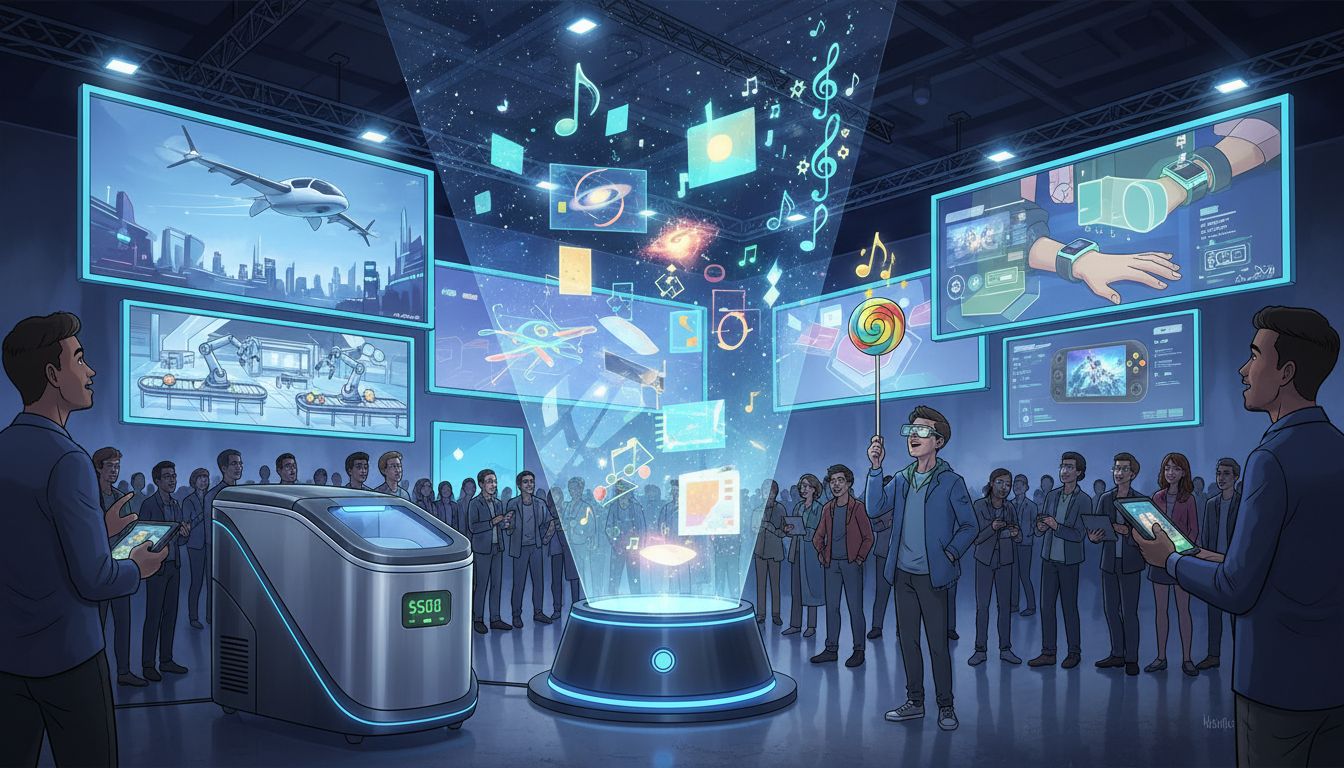
Each January, consumer tech shows hint at what will land on store shelves. The Best of CES 2026 innovation awards highlighted this.
They showed how much AI has seeped into televisions and laptops. It is also in wearables and home devices.
Displays got brighter and smarter. Companies like TCL showed their X11L SQD LED TV.
This uses a super quantum dot approach. It pushes color quality beyond past LED systems. It sets a new standard for global technology in the home.
AI everywhere, often quietly
Remember when having a “smart” tag meant one assistant in the corner? That looks quaint now. 2026 tech trends bring agentic AI into more corners of your device life.
Agentic AI has moved center stage. These systems plan and act rather than simply reply.
Imagine your home assistant managing errands. It stitches together shopping, calendar, and local services. It checks traffic and weather simultaneously. It reduces the need for manual phone job tasks like booking appointments.
For you, that might show up as “set it once” patterns. You describe what you want the outcome to look like.
A mesh of tools quietly keeps nudging your systems. They move toward that result, day after day.
This is how intelligent systems improve your life. It happens without you constantly checking them.
How to Position Yourself for 2026 and Beyond
By now, you might be thinking, “Ok, this is interesting, but what am I supposed to do with it?”
Fair question. You do not run a chip factory. You might not set a company-wide tech policy.
But you do shape how you and your team use tools. That gives you more leverage than you may think.
Here are some simple ways to plug into 2026 tech trends.
1. Move from “single tool” to “agentic workflows”
Instead of chasing yet another separate AI app, look at your existing stack. Start looking for ways your existing tools can work together. That might mean linking your docs and calendar.
Connect your CRM through an agent layer that understands your role. Keep an eye on tools that support protocols like MCP, ACP, or A2A. These make connections smoother.
These protocols let different systems exchange context without constant manual wiring from you. Begin small. Pick one repeating workflow you hate.
Ask, “Which AI agents could I assign here so I do this less by hand?” Then expand from there once it works.
2. Care more about where your data lives and how it is protected
It is tempting to treat privacy as someone else’s job. 2026 removes that comfort. The spread of confidential computing is your hint.
Digital provenance and AI security platforms are also signals. Data governance is no longer just for lawyers and security teams. You must understand the policy terms involved.
When you pick AI-powered services, check how they talk about data use.
Do they train on your private inputs? Do they give controls that map to new privacy standards?
Being selective here does not slow you down. It saves you from messy cleanup later.
This is true whether you run a solo shop or a large team.
3. Learn the basics of AI reasoning, not just prompts
Models like DeepSeek R1 and others focused on reasoning hint at the future. They show where interactions are going. The people who gain the most from them understand how to ask for plans.
They ask for checks and critiques, not just quick answers. Think less “give me the final text.” Think more “show me options, compare tradeoffs, and suggest steps.”
This mirrors how top builders describe work with AI in fields such as design and music.
That kind of back and forth turns AI from a search engine copycat into a partner. It becomes something closer to a thought partner that keeps you sharp. It helps you define your AI strategy.
This applies to any job title you hold. Whether you are at a title company or a tech firm, reasoning matters. Even job title company directories will list AI skills soon.
Every function job listing will eventually require this skill. It is the future of work. It defines the new job function.
Conclusion
If you strip away the acronyms and buzz, 2026 tech trends tell a simple story. Intelligence is spreading into every layer of the stack. It moves from the chips and routers underneath you.
It flows to the AI agents inside your apps. It reaches the security nets guarding it all. AI hype is settling into reality.
Yes, there are real questions to wrestle with. These range from energy use to job shifts to regulation.
But the choice is not between embracing 2026 tech trends or living “offline”. The choice is between using them with awareness and agency, or letting them shape your life without your input.
You know the pressure points to watch. You have a few practical ways to adjust your own workflows. This wave of tech can serve you, instead of the other way around.