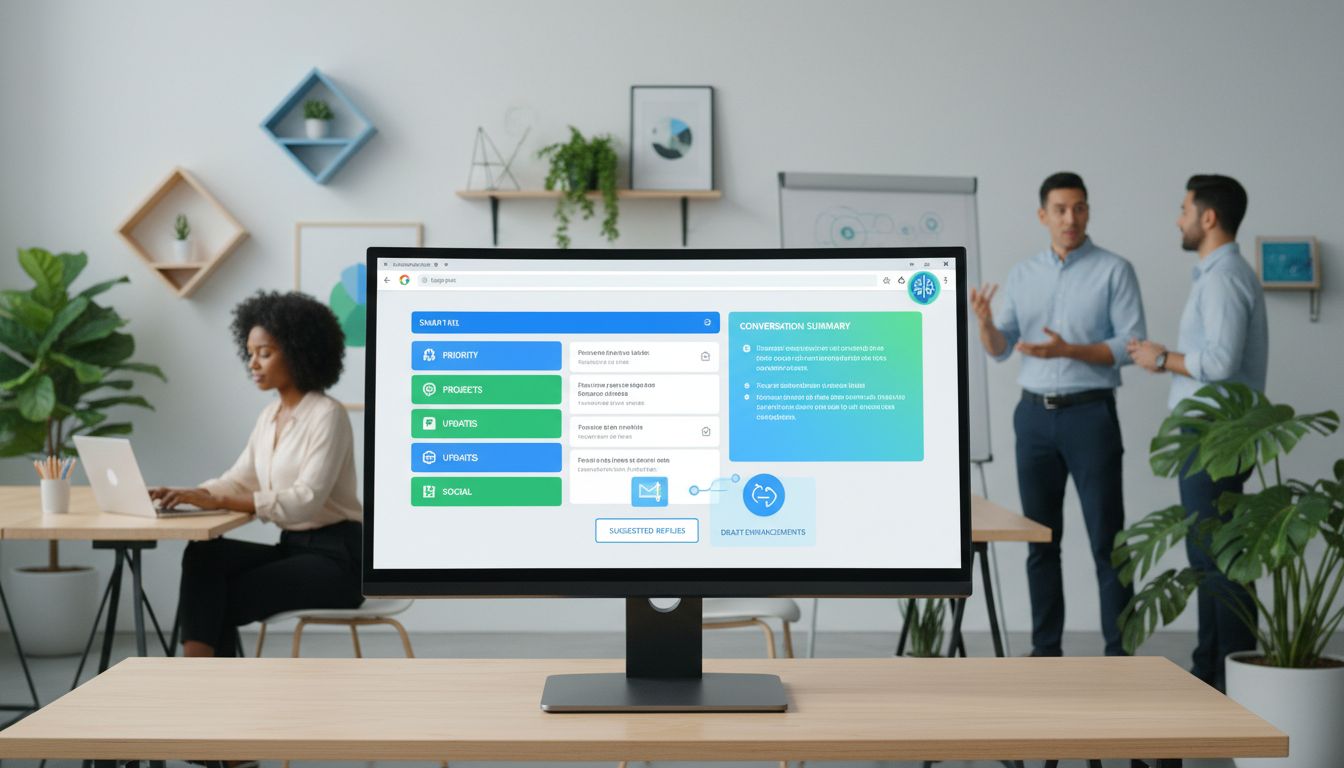
Google AI glasses 2026 are about to jump from sci-fi fantasy into something you can actually wear on your face. Because Google AI glasses 2026 sit right where your eyes already are, they could quietly change how you search, shop, learn, and move through your day. You might do all this without ever pulling out your phone.
Right now, the wearable technology market is full of devices, from smart speakers to little pins you clip to your shirt. But glasses differ because they blend into daily life. You already wear sunglasses, readers, or blue light lenses.
Picture those frames hearing you, answering you, and sometimes showing you information without a bright rectangle in your hand. This is not just a replay of Project Aura or the old Glass experiments. This is a fresh attempt to make artificial intelligence a physical part of your reality.
If you are curious about whether this is hype or the next big thing, you are in the right place. We will walk you through what Google is building and why it is forming strategic partnerships with brands like Warby Parker. We will also explore what this shift means for you when 2026 arrives.
Table Of Contents:
- What Exactly Are Google AI Glasses?
- Audio First, Screens Second
- Why Google Is Going So Hard After AI Glasses
- Core Features You Can Expect From Google AI Glasses
- How Google AI Glasses 2026 Fit Into The AI Device Boom
- Market Context and Strategic Timing
- Privacy, Comfort, and The Human Side
- Conclusion
What Exactly Are Google AI Glasses?

Google is not shipping just one single model. Instead, they plan a small family of glasses that lean on Gemini, their new flagship AI model. CNBC reported that Google will launch the first of these AI-powered glasses in 2026 to keep pace with competitors.
Two main versions are coming. You can expect audio-only glasses and glasses that include a small in-lens display. Both run on the same Google AI backbone.
Audio First, Screens Second
The audio-only version works a lot like the current Ray-Ban Meta smart glasses. You speak, it listens. There is no glowing display distracting you.
Instead, Gemini responds through tiny speakers near your ears. This is the low-friction version you could wear all day. It feels less intrusive than wearing a full XR headset in public.
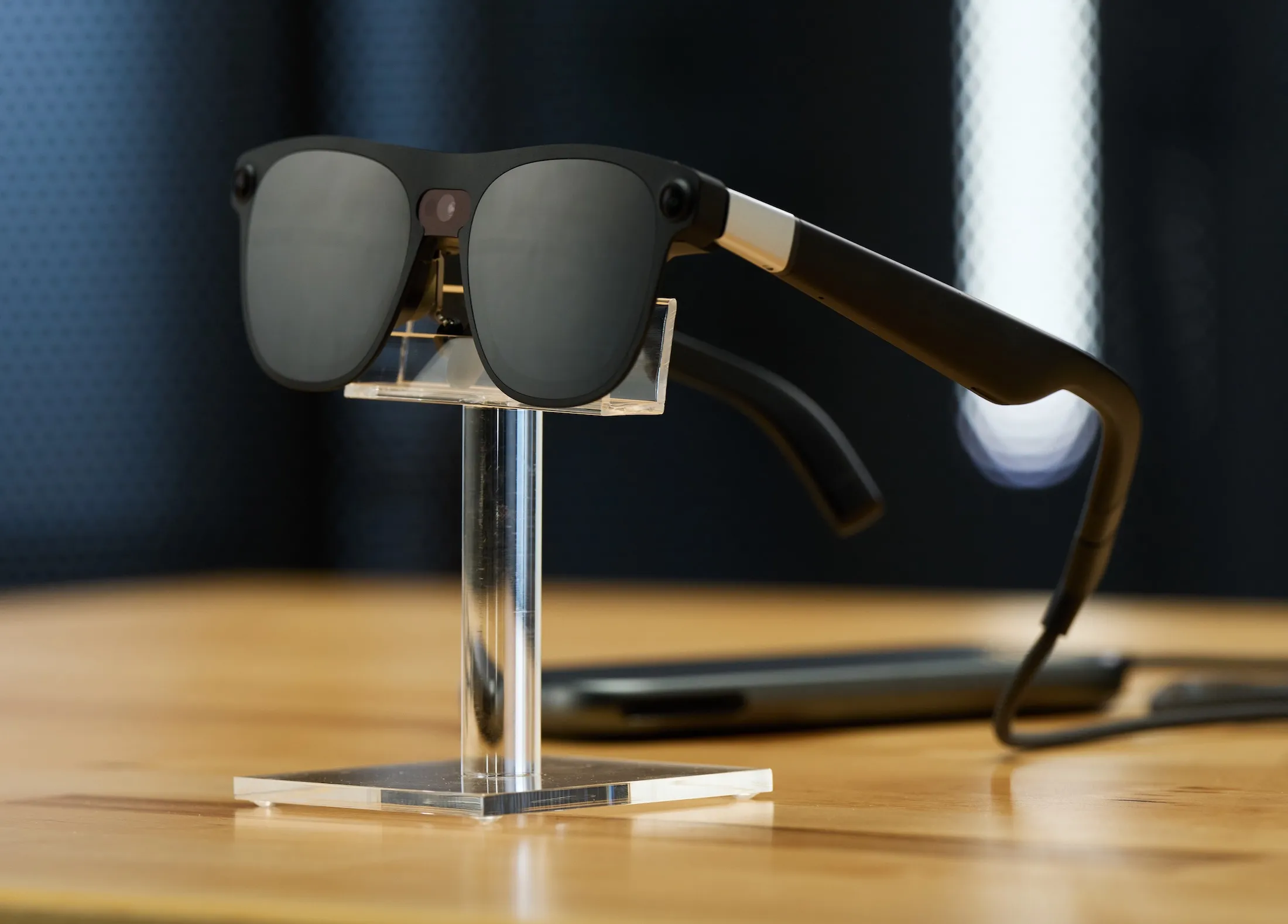
The display glasses raise things a notch. A small transparent screen sits inside the lens. It can show simple text, icons, or basic visuals.
Think about turn-by-turn arrows, short messages, or a brief translation appearing in your view. It is closer to augmented reality. However, early leaks suggest it will stay subtle rather than flooding your view with video.
The Design Partners: Warby Parker, Gentle Monster, Samsung
Google learned a hard lesson from the original Google Glass days. People do not want to look like a tech demo walking around a grocery store. That is why they teamed up with fashion-forward eyewear brands.
Warby Parker confirmed in a recent SEC filing that its first Google-partnered glasses are scheduled for 2026. The frames will not just be smart. They will look like normal glasses designed to fit your style.
On top of Warby Parker, Google is collaborating with Gentle Monster and working with Samsung on hardware design. Gentle Monster is known for bold styles, proving they care about fashion as much as function. This helps the glasses built by Google appeal to a broader audience.
Reuters has long tracked Warby Parker as a modern retail player and its stock market journey. Their listing hints at how seriously they treat long-term product bets. These partnerships are critical for the supply chain and mass adoption.
Why Google Is Going So Hard After AI Glasses
On the surface, it might feel like another gadget launch. But zoom out a bit. Google is fighting for how you access AI in daily life, and glasses sit at the front of that battle.
Meta scored real traction with its Ray-Ban smart glasses, and that woke Google up. The days of AI staying stuck in chat windows and apps are ending. The next phase is ambient AI baked into the objects around you.
Glasses hit the perfect sweet spot. They are close to your eyes and ears. They work in bright sun where phone screens struggle.
They already come in thousands of styles. Add microphones, a tiny AI chip, and a short-range display. Suddenly, you have an AI assistant sitting on your face all day.
Google AI Everywhere You Look
To understand why this matters, it helps to see what Google AI is already doing across other products. From cars to search tools, Google AI is becoming the quiet engine inside other companies. This expansion includes Google’s Android XR initiative.
General Motors now leans on a Google AI chatbot inside OnStar to help handle customer conversations. That shows Google is comfortable shipping its AI into other brands. They are doing this beyond just their own Pixel phones.
Developers can also connect Gemini through Google AI Studio integrations. This lets them blend AI features into third-party tools without writing everything from scratch. The more Google AI lives inside daily tools, the more useful those glasses become.
Understanding The Android XR Platform
The hardware is only half the story. The software backbone is Google’s Android XR platform. This is a modified version of Android specifically built for mixed reality and spatial computing.
Android XR is designed to power headsets and glasses from multiple manufacturers. It is similar to how Windows runs on laptops from Dell, HP, and Lenovo. In this case, Google provides the OS for the Samsung Galaxy XR devices and others.
The Android XR platform aims to unify the fragmented mixed-reality headsets market. Currently, devices like the Apple Vision Pro run their own closed systems. Google wants an open ecosystem where apps work across different XR devices.
This approach allows for better integration with existing Windows PCs and Android phones. It creates a seamless flow of data. Your glasses essentially become a lightweight extension of your digital life.
Core Features You Can Expect From Google AI Glasses
We do not have final spec sheets yet. But we can look at what the Ray-Ban Smart glasses offer and what Gemini handles. Here are educated guesses about the core features of these AI wearables.
| Feature Area | What It Likely Looks Like |
|---|---|
| Voice assistant | Always listening, powered by the Gemini AI model for natural chat |
| Audio experience | Open-ear speakers for music, calls, and spoken answers without earbuds |
| Display (display model only) | Simple text, icons, and short prompts in a transparent corner of the lens |
| Camera | Low-profile camera for quick photos, video clips, and scene understanding |
| AI smarts | Live translation, real-time descriptions, and Q and A about what you see |
| Connectivity | Bluetooth and WiFi link with your phone, maybe direct cloud access |
| Design | Lightweight glasses from Warby Parker and Gentle Monster |
The big theme is hands-free help. It does not steal your attention the way a phone does. If Google gets this balance right, the experience feels like natural interaction.
Day-to-Day Use Cases That Actually Matter
You do not buy a pair of AI glasses just to brag about the tech. You buy them because they solve little annoyances. Here are real-world situations where glasses outperform a phone.
- You engage travel mode in a new city, and arrows float in your view to guide you to your hotel.
- You are cooking with messy hands and ask the assistant to read step three again.
- You attend a busy event and ask Gemini to remind you of a colleague’s name privately.
- You glance at a foreign sign, and a translated version appears instantly.
- You capture video for social media without holding a camera in front of your face.
The closer these experiences are to real daily pain points, the more sticky these devices become. Phones will not vanish yet. However, your glasses may start handling the tasks that make phone use awkward.
How Google AI Glasses 2026 Fit Into The AI Device Boom
Google is not building in a vacuum. We already have AI gadgets all over the market. Meta Platforms, Rabbit R1, Humane AI Pin, and smart earbuds are all fighting for your attention.
The trick for Google is to position its glasses as a normal piece of your life. These AI glasses could easily become one of the top gifts for hard-to-shop-for people.
AI, Search, and What Happens to Your Phone
It is fair to ask if we even need glasses if we have phones. Here is the key difference.
Phones make you bend your body around the screen. Glasses flip that dynamic. They keep your head up and eyes forward. Little moments of context are overlaid on the real world.
Google leans hard into an AI-powered search future. You can see this in early takes on the new Google AI search experience. Glasses become a new front door into that system.
Ask yourself a question. Would you rather speak a natural question and see just what matters near your eye? Or would you rather open three apps and scan pages?
If the answer is the first option, Google wins. The hardware you are wearing is part of that victory. This is the promise of AI-powered interfaces.
Market Context and Strategic Timing
The release timing of 2026 is specific. It aligns with the maturity of the wearable technology sector. It also allows time for the Galaxy XR headset to establish the software platform first.
Financial analysts keeping an eye on market data will watch this launch closely. The success of the technology sector often depends on the next big hardware platform. Investors using a stock screener might look at Alphabet and partner stocks leading up to the release.
External factors like the Fed rate and consumer spending power will also impact adoption. High-end tech needs a strong economy to thrive. However, offering a free account for basic AI services could lower the barrier to entry.
Content partnerships will also be vital. Imagine watching clips from Warner Bros Discovery on your in-lens display during a commute. Or getting news tips flashed to your peripheral vision.
Even financial news updates could stream quietly to traders or investors. Google has the data ecosystem to make this happen. They just need the delivery mechanism.
Privacy, Comfort, and The Human Side
Every time AI creeps closer to our bodies, trust questions show up. People still remember the privacy backlash from early Google Glass testers. No one wants to be recorded without consent.
Google knows it has to address this properly. Expect clear camera indicators and hardware shutters.
Users will likely have robust privacy choices and ad choices menus. Google has learned that hidden behavior kills adoption fast. They must be transparent about how they collect data.
Comfort is the other big pillar. Heavy XR headsets give you headaches. Bulkier arms press against your temples.
Partnering with known eyewear brands means we get comfortable frames. You should be able to wear them for eight hours without regretting it.
Who Are Google AI Glasses Really For?
At first, early adopters will grab them. But once the second wave lands, clearer groups will emerge. These are the people getting the most from Google’s Android XR.
- Knowledge workers who hop between meetings and documents all day.
- Students who want quiet access to references without opening a laptop.
- Frequent travelers who juggle languages and travel mode maps.
- Creators who document life and use AI to edit clips later.
- People with low vision who use a powerful assistive device.
The magic comes when developers build add-ons. They will use hooks similar to those in Google AI Studio. Picture fitness coaches talking you through a run or language apps that help you chat.
These glasses will likely cost as much as a midrange phone. It helps to walk through a few personal questions before deciding if AI glasses are for you. Treat this as a short buyer guide before 2026.
- Do you already wear glasses daily, and are you happy adding tech to them?
- Do you talk to voice assistants now, or do you avoid speaking to devices?
- Are you curious to try new workflows like real-time summaries or translations?
- How sensitive are you to being recorded, and how do your friends feel?
- Would you accept charging your glasses every night for these features?
If your answers lean yes, these glasses will likely click for you. If your answers lean no, that is okay too. It may take a couple of hardware generations to feel worth it.
Conclusion
We are heading toward a future where the best tech fades into the background. That is why Google AI glasses 2026 are so interesting. They do not try to be a giant new screen that rules your attention.
Instead, they act as a small layer of help at the edge of your awareness. They utilize the Gemini AI to provide context only when you need it. This keeps you present in the real world.
Google is making a serious long-game bet by teaming up with names like Warby Parker. They are grounding launch timelines in documents like the 2026 SEC filing. They are riding on a powerful Google AI backbone that already supports products and developer tools.
They are saying that search and assistance will not stay trapped in rectangles. Even the White House has signaled interest in how AI shapes our future. Regulation and innovation are moving in parallel.
Whether you are excited or skeptical, this is the right time to watch closely. You can sign up for free newsletters or read blog post updates to stay informed. Always fact-check rumors as the release date approaches.
If the first wave of Google AI glasses lands well, everything changes. The pair you slip on for sun glare might become your most personal computer.