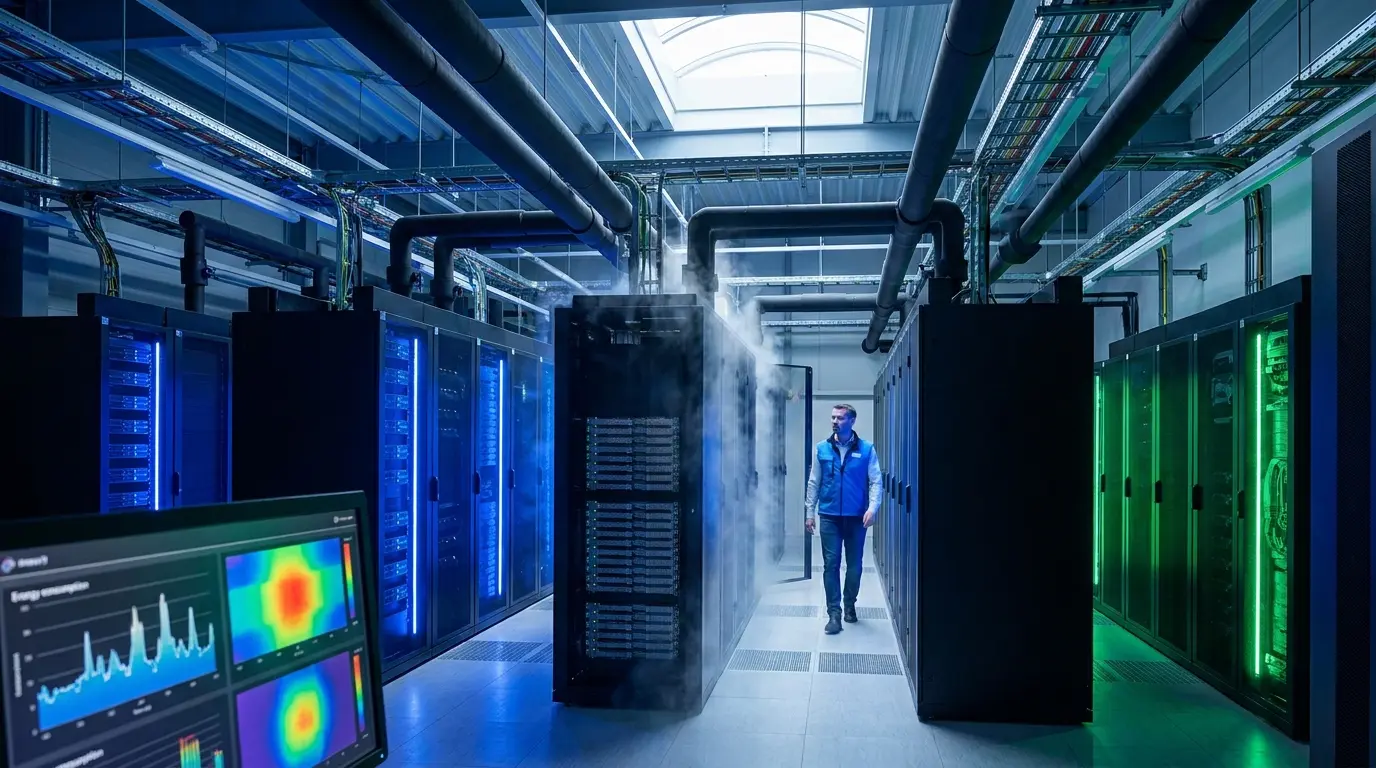

Artificial intelligence models require massive amounts of computing power to process complex information quickly. This growing need forces operators to rethink how they manage electrical draws across their entire operations. As companies race to build better algorithms, the resulting AI data center energy costs have become a critical financial factor. The current AI data center boom stems directly from this rapid shift to intensive computational tasks, where data centers continue to consume a larger share of the global power supply. Industry experts suggest that the infrastructure required to support these models is evolving faster than the electrical grids that power them.
The transition toward generative AI has fundamentally altered the architectural requirements of modern facilities. Unlike traditional web hosting, AI workloads involve constant, high-intensity mathematical calculations that keep hardware running at peak capacity for days or weeks. This sustained load creates a thermal environment that challenges even the most advanced cooling technologies currently available. Consequently, the strategic planning of power distribution has moved from a secondary concern to the primary bottleneck for technological advancement.
Training a single blank”>machine learning model takes thousands of specialized graphics processing units running continuously for months. These advanced chips run much hotter and draw significantly more current than standard computer processors. Consequently, a modern ai data center requires specialized cooling systems that drastically increase monthly electricity bills. The sheer density of these chips means that a single rack in a data center can now require as much power as an entire floor of a traditional office building.
To manage this heat, many operators are moving away from traditional air cooling toward blank”>liquid cooling solutions. These systems circulate specialized fluids directly over the processors to wick away heat more efficiently than fans ever could. While these upgrades improve performance, they also represent a significant capital investment that adds to the overall project budget. Facility managers must balance the immediate costs of hardware with the long-term savings provided by more efficient thermal management systems.
Traditional computing facilities simply lack the underlying infrastructure to support such high energy density requirements safely. Facility operators must upgrade their electrical panels and cooling towers to handle this surging electricity demand appropriately. This rapid data center development forces technology companies to reconsider their entire operational framework and budget. Without significant investment in data center infrastructure, the hardware required for generative AI simply cannot function at peak performance.
- Advanced computing chips require exponentially more power than traditional processors.
- Older facilities cannot safely handle the dense power requirements of modern algorithms.
- Cooling infrastructure upgrades represent a massive capital expense for facility operators.
Surging Demand: Data Center Grid Strain and Power Plant Capacity
The surging demand for electricity has led some utility providers to implement tiered pricing models for industrial users. These models often penalize facilities that exceed their projected consumption during peak hours, further complicating the financial outlook for AI startups. To mitigate this, some companies are exploring the use of on-site microgrids and battery storage systems to buffer their impact on the local utility. This shift toward energy independence is becoming a hallmark of the most resilient technology hubs in the country.
Regional transmission organizations, such as the PJM Interconnection, are sounding the alarm about potential capacity shortfalls. When a major data hub connects to the grid, it can consume hundreds of megawatts, equivalent to the usage of a small city. This data center expansion requires not just more generation, but also massive investments in transmission lines and substations. If the power grid cannot adapt, we may see localized brownouts or significant delays in new data center connections.
Financial Implications: Data Center Financial Implications and Electricity Price
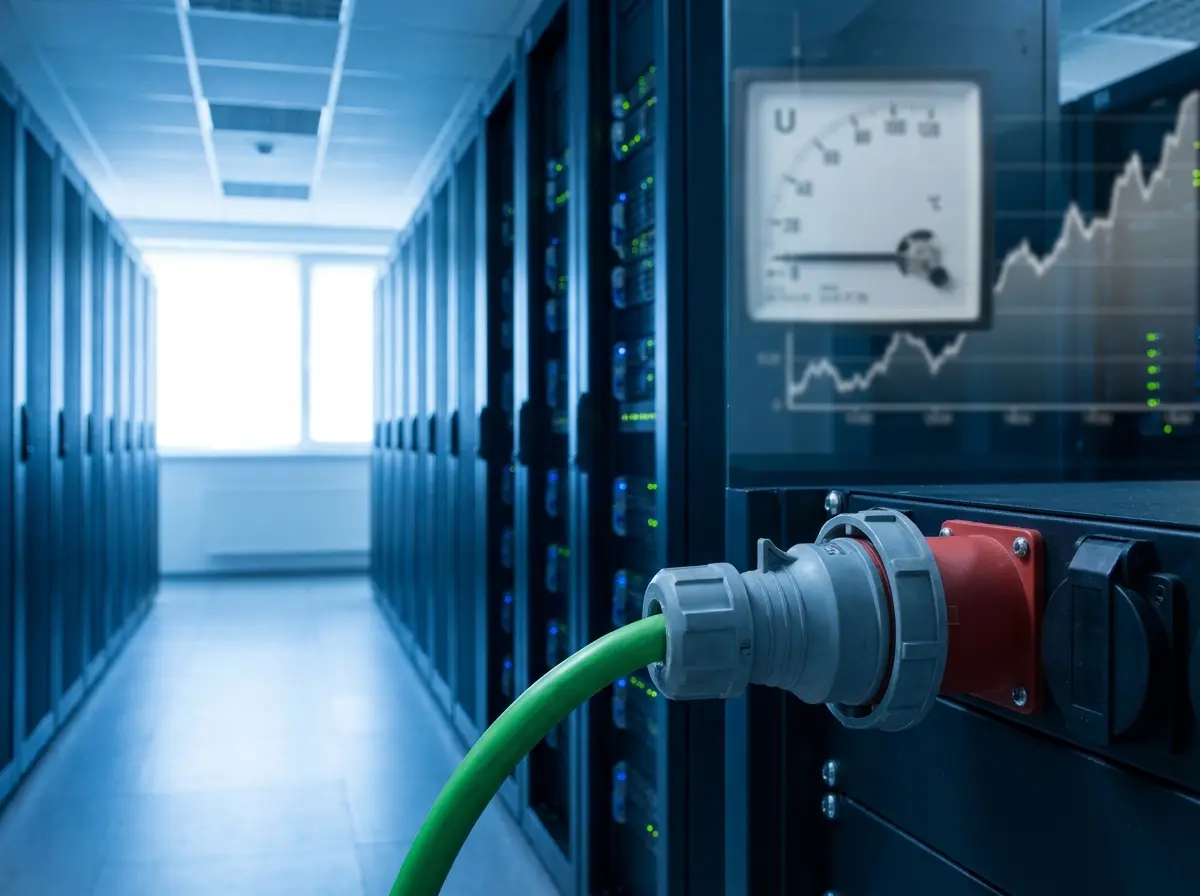
For many enterprises, the electricity price has become the single largest variable in their operational budget. As electricity prices fluctuate due to global events, such as the iran war risks or supply chain disruptions, the cost of running AI models can skyrocket. Companies must now engage in complex energy hedging strategies to protect themselves from soaring energy costs. A slight increase in the electricity price can translate into millions of dollars in additional power costs over a fiscal year.
The volatility of the energy market has forced many CFOs to treat power procurement as a core strategic function. Instead of simply paying the monthly bill, companies are now negotiating complex power purchase agreements that span decades. These agreements often include clauses for demand response, where the facility agrees to lower its usage during grid emergencies in exchange for lower rates. This level of financial engineering is now necessary to maintain a competitive edge in the high-stakes world of artificial intelligence.
Furthermore, the higher electricity rates often passed down to industrial consumers can impact the overall profitability of AI services. Many tech giants are now looking to sign long-term power purchase agreements (PPAs) with renewable energy providers to lock in a stable electricity price. This shift is not just about “going green”; it is a calculated move to mitigate the financial volatility associated with the data center energy market. Managing AI data center energy costs is now a core competency for any serious technology firm.
Big Tech Expansion: Data Center Tech Giants and Hyperscale Data Center Expansion
The tech giants are leading the charge in the hyperscale data center market, building massive facilities that house hundreds of thousands of servers. These hyperscale data environments are designed from the ground up for maximum efficiency, yet their total energy footprint remains staggering. By centralizing resources, these companies can achieve economies of scale that smaller data centers simply cannot match. However, the sheer volume of data centers being built by these firms is driving a global center buildout that shows no signs of slowing.
Within these massive complexes, big tech firms are deploying custom-designed silicon that is optimized for specific AI tasks. These proprietary chips often offer better performance-per-watt than off-the-shelf components, helping to keep ai data centers running as efficiently as possible. Despite these gains, the sheer number of chips being deployed means that the total power draw continues to climb. This paradox of efficiency—where better technology leads to higher total consumption—is a major challenge for corporate sustainability officers.
As these tech giants continue their data center expansion, they are increasingly becoming energy companies themselves. Some are investing in nuclear fusion research, while others are building their own solar and wind farms. This vertical integration is a direct response to the rising electricity costs and the need for a reliable power supply. The hyperscale data center of the future will likely be a self-contained energy ecosystem, less dependent on the traditional power grid.
Tracking Consumption: Data Center Electricity Demand and International Energy Agency Trends
According to the International Energy Agency, the total electricity demand from data centers could double by 2026. This news analysis highlights a critical challenge: how to support the ai data center boom without compromising global climate goals. Many sectors, including data processing and telecommunications, are seeing a shift toward more energy-intensive workloads. The centers continue to evolve, but the pace of energy efficiency improvements is currently being outstripped by the growth in data center demand.
The impact on national electricity grids is already becoming apparent in countries with high concentrations of digital infrastructure. In some regions, national electricity consumption is being driven almost entirely by the growth of server farms and cloud computing hubs. This trend has led to calls for more stringent energy efficiency standards and better reporting of carbon footprints. Governments are now looking for ways to incentivize the use of carbon-free energy sources to power these digital engines.
The International Energy Agency report suggests that data centers currently account for about 1% to 1.5% of global electricity use. While that may seem small, the concentration of this demand in specific geographic hubs creates significant local challenges. As the data center buildout continues, governments are being forced to implement new policies to ensure that data centers do not overwhelm local resources. Tracking these trends is essential for understanding the long-term viability of the data center industry.
Optimizing Operations: Data Center Optimization and Electricity Costs
To combat rising electricity costs, facility managers are turning to advanced AI-driven optimization tools. These systems can dynamically adjust cooling and power distribution based on real-time server loads, significantly reducing electric bills. By using AI to manage AI data center energy costs, operators can find efficiencies that were previously hidden. For example, liquid cooling technologies are becoming more common in the data center, as they are far more efficient at removing heat than traditional air-based systems.
Another area of focus is the Power Usage Effectiveness (PUE) metric, which measures how much energy is used by the computing equipment versus the supporting infrastructure. Modern facilities strive for a PUE as close to 1.0 as possible, indicating that almost all power is going directly to the servers. Achieving this requires a holistic approach to design, from the orientation of the building to the type of insulation used in the walls. Even small improvements in PUE can result in millions of dollars in annual savings for a large-scale facility.
Optimization also involves software-level changes, such as scheduling non-critical tasks during periods of lower electricity prices. This “load shifting” helps balance the strain on the power grid and can lead to substantial savings. As data centers become more intelligent, they will be able to participate in demand-response programs, essentially acting as a giant battery for the grid. This level of data center sophistication is necessary to maintain profitability in an era of high energy prices.
Future Expansion: Data Center Buildout and Network Expansion
The data center buildout is a global phenomenon, with new hubs emerging in Europe, Asia, and the Americas. This center expansion is driven by the need for lower latency and the desire of many nations to have “sovereign AI” capabilities. However, each new data center requires a massive amount of infrastructure, from fiber optic cables to high-voltage power lines. The data center expansion is also creating a surge in demand for specialized construction materials and skilled labor.
We are also seeing a shift toward “modular” construction, where pre-fabricated server rooms are shipped to a site and plugged into the power grid. This approach allows companies to scale their capacity much faster than traditional brick-and-mortar construction would permit. However, these modular units still require a robust connection to the local utility, which remains the primary constraint on growth. As the industry matures, the ability to deploy capacity quickly and efficiently will be a major differentiator for providers.
In many regions, the center buildout is meeting resistance from local communities concerned about noise, water usage, and the impact on electric bills. Developers must now navigate a complex web of environmental and social considerations before they can even break ground. Despite these challenges, the data center industry is expected to see double-digit growth for the foreseeable future. The data center buildout is not just about buildings; it is about creating the backbone of the 21st-century economy.
Regulatory Challenges: Data Center Regulatory Challenges and Zoning
As data centers become more prominent, they are attracting increased scrutiny from regulators. Zoning laws are being updated to address the unique footprint of a major data center, which often requires massive amounts of land and water. Some jurisdictions are even considering moratoriums on new data center construction until the impact on the local power grid can be fully assessed. These regulatory hurdles can add years to the timeline of a data center project.
Environmental regulations are also becoming more stringent, with new mandates requiring facilities to use a certain percentage of renewable energy. This has led to a surge in the market for Renewable Energy Credits (RECs), though critics argue that these credits do not always lead to new green energy generation. As a result, there is a growing preference for “additionality,” where the tech company directly funds the construction of new wind or solar farms. This proactive approach helps companies meet their sustainability goals while also securing their future energy needs.
Furthermore, there is a growing push for data centers to be more transparent about their energy usage and carbon emissions. New reporting requirements are being introduced in several countries, forcing data center operators to disclose their electricity demand and the source of their power. This regulatory environment is pushing the industry toward more sustainable practices, but it also adds to the overall data center operational complexity. Navigating these rules is now a critical part of data center management.
Total Cost of Ownership: Data Center Total Cost of Ownership and Electric Bills
When evaluating the total cost of ownership (TCO) for AI infrastructure, electric bills are often the most significant factor after the initial hardware purchase. The higher electricity consumption of AI-optimized servers means that the operational costs can quickly exceed the capital expenditure. Companies must look beyond the sticker price of a GPU and consider the long-term AI data center energy costs. A data center that is not optimized for energy efficiency will quickly become a financial liability.
The lifecycle of AI hardware is also shorter than traditional server equipment, often requiring replacement every three to five years to keep up with performance gains. This rapid turnover means that the infrastructure must be designed for flexibility, allowing for easy upgrades without major structural changes. When calculating TCO, managers must also account for the rising utility bills that come with each new generation of more powerful, more power-hungry chips. Failure to account for these escalating costs can lead to significant budget shortfalls mid-project.
TCO analysis must also include the cost of cooling, power distribution, and potential grid connection fees. In some areas, data centers are required to pay “impact fees” to help fund upgrades to the local power grid. These hidden costs can significantly alter the ROI of a data center project. As electricity prices continue to rise, the importance of a comprehensive TCO model for data center operations cannot be overstated.
Edge Computing: Data Center Edge Computing and Local Power Costs
The rise of edge computing is shifting some of the data center demand away from massive central hubs and toward smaller, localized facilities. These edge data centers process data closer to the source, reducing latency and potentially lowering power costs by avoiding long-distance data transmission. However, managing energy across a distributed network of data centers presents its own set of challenges. Each small data center must still be cooled and powered efficiently.
Edge facilities are particularly useful for real-time AI applications, such as autonomous vehicles or industrial automation, where every millisecond counts. By processing data locally, these systems can react faster than if they had to communicate with a distant hyperscale facility. However, the decentralized nature of the edge means that maintenance and energy management are more complex. Operators must find ways to monitor and optimize hundreds of small sites simultaneously to keep costs under control.
Edge data centers are often located in urban areas where electricity prices may be higher than in rural hyperscale hubs. This means that efficiency is even more critical at the edge. By distributing the workload, companies can reduce the strain on any single part of the power grid, but they must also manage a more complex energy footprint. The balance between centralized and edge data center resources will be a key theme in the coming years.
Infrastructure Wave: Data Center Infrastructure Wave and AI Data Center Boom
We are currently in the midst of a massive data center infrastructure wave, fueled by the ai data center boom. This wave is transforming the real estate market, the energy sector, and the technology industry all at once. A major data center is no longer just a warehouse for servers; it is a sophisticated piece of industrial infrastructure. The data centers continue to grow in size and complexity, pushing the boundaries of what is possible in terms of power density and cooling.
The future of the industry will likely involve a mix of traditional grid power, on-site renewables, and perhaps even small modular nuclear reactors (SMRs). These SMRs offer the promise of constant, carbon-free baseload power that could be deployed directly at the site of a hyperscale facility. While the technology is still in its early stages, several major tech firms have already expressed interest in using nuclear power to meet their growing energy needs. This would represent a major shift in how the digital economy is powered.
As we look to the future, the success of the AI revolution will depend on our ability to build and manage this data center infrastructure sustainably. This means finding new ways to generate power, more efficient ways to cool servers, and smarter ways to manage the power grid. The data center of 2030 will likely look very different from the data center of today, but its role as the engine of the digital economy will only be more pronounced. Understanding the AI data center energy costs is the first step in navigating this exciting and challenging landscape.
Frequently Asked Questions
How much power does a typical AI data center use?
A modern ai data center can use anywhere from 50 megawatts to over 100 megawatts of power, which is enough to power tens of thousands of homes. The electricity demand is driven by the high-performance GPUs used for training models.
Why are AI data center energy costs so high?
The AI data center energy costs are high because AI chips require more electricity to perform complex calculations and generate significant heat, which requires expensive, high-powered cooling systems to manage.
What is the impact of data centers on the power grid?
Data centers can place a significant strain on the power grid, sometimes requiring utilities to build new power plants or transmission lines. Organizations like the PJM Interconnection work to manage this data center demand to prevent outages.
How can data center expansion be made more sustainable?
Sustainability in data center expansion can be achieved through the use of renewable energy, advanced liquid cooling, and AI-driven power management to reduce overall electricity costs and carbon footprints.
What role do tech giants play in the data center market?
Tech giants are the primary drivers of the hyperscale data center market, investing billions in data center buildout projects to support their cloud and AI services globally.