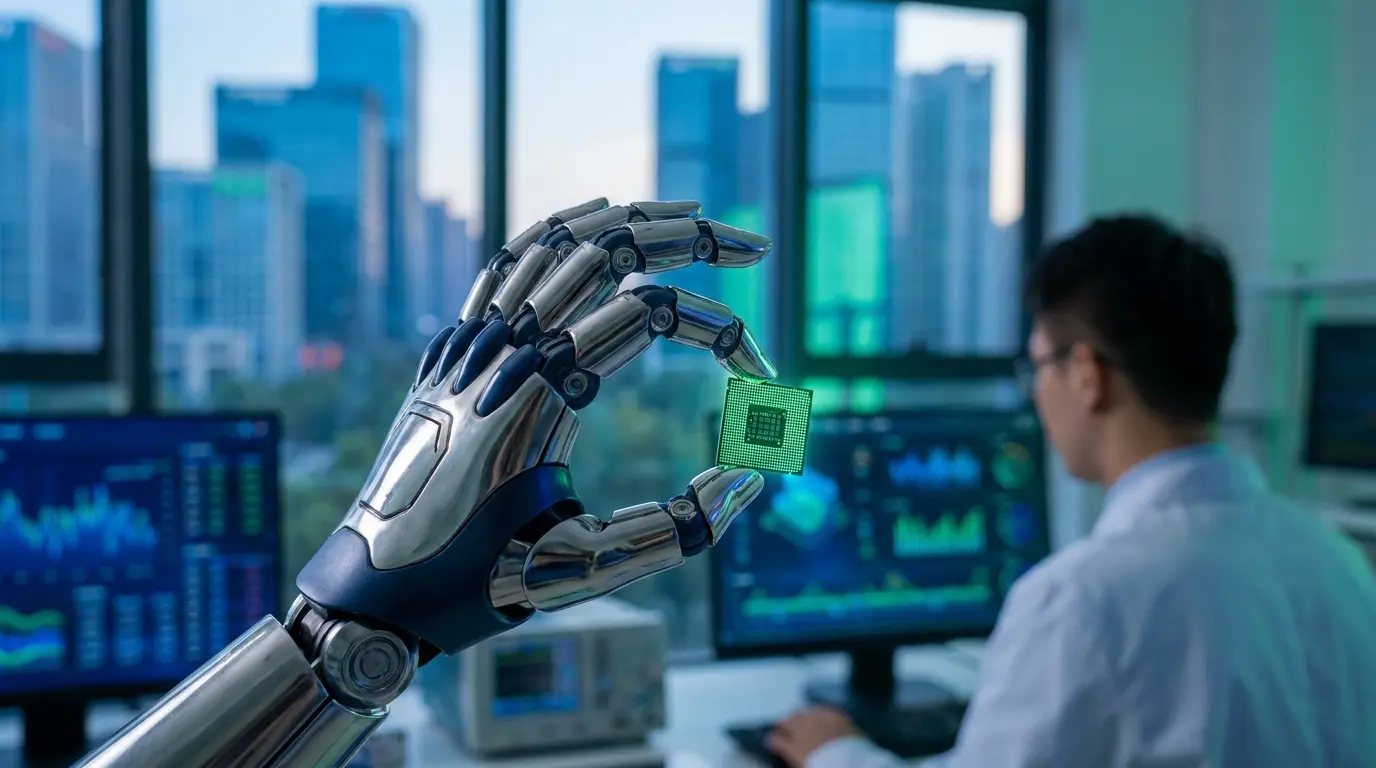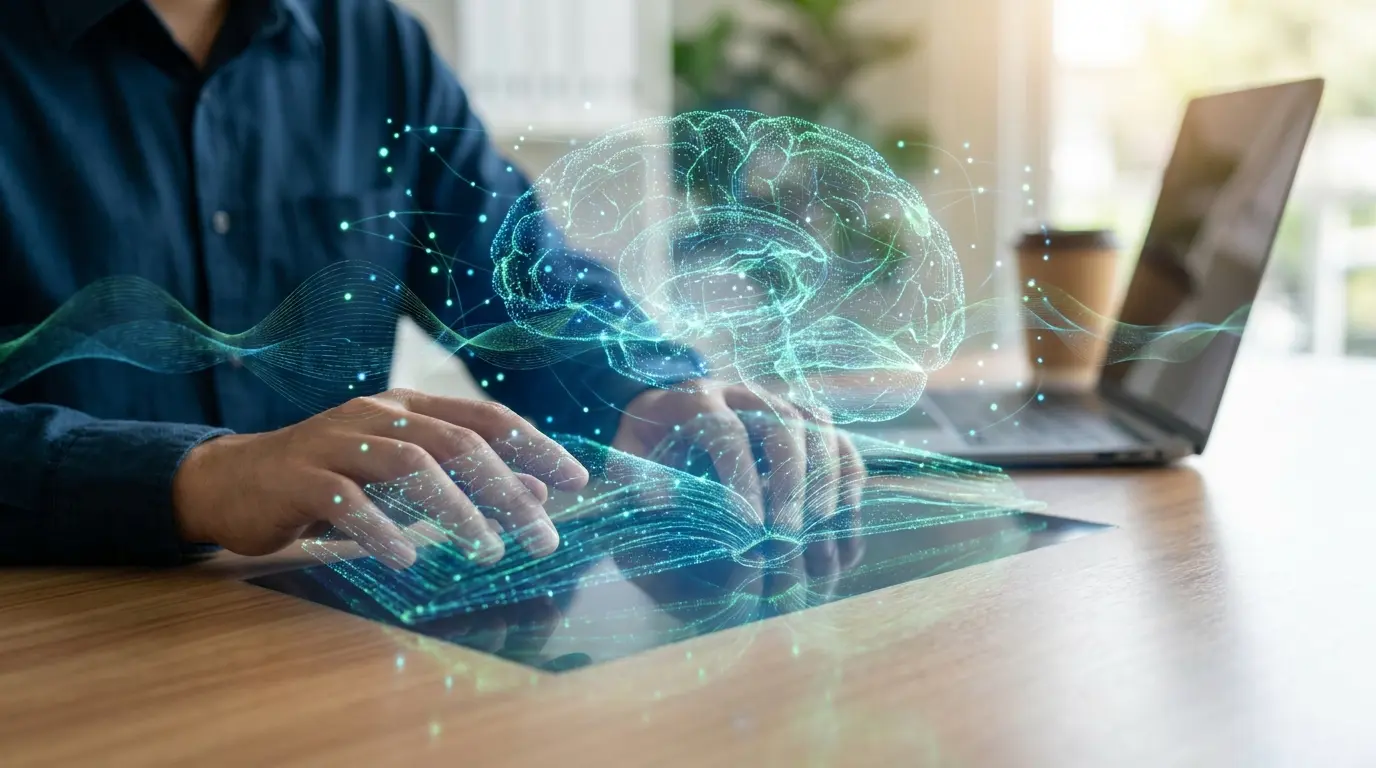
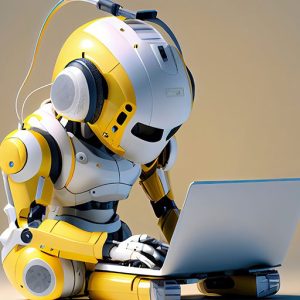
Artificial intelligence is fundamentally altering the American workforce at an unprecedented speed, driving a massive wave of AI job reshaping across the country. You probably hear daily predictions about machines replacing human workers across every industry, yet the actual data points to workforce transformation rather than outright replacement. Companies are integrating algorithms to handle repetitive tasks, freeing humans to focus on high-level strategy and complex problem-solving within their organizations.
This significant shift requires workers to adapt and learn how to collaborate effectively with intelligent systems to maintain their competitive edge. Understanding this transition helps professionals prepare for the future economy while ensuring they remain relevant in an increasingly automated landscape. The industrial revolution replaced physical labor, but the artificial intelligence revolution targets cognitive tasks, making the current technological shift feel highly disruptive.
Yet, embracing these tools often leads to more fulfilling and creative career opportunities for those willing to master digital transformation. By offloading routine data processing to machines, professionals can dedicate their energy to innovation and human-AI collaboration. This evolution marks the beginning of a new era where human intuition and machine efficiency create a powerful synergy in the workplace.
Recent studies show a complex picture of employment in the artificial intelligence era, where generative AI automation plays a central role. A widely cited Goldman Sachs report estimates that generative AI could automate roughly 300 million full-time jobs globally. Yet, the same report highlights that this automation will likely create entirely new occupational categories that we cannot yet fully imagine.
Historically, technological disruptions always generate more employment opportunities than they eliminate over the long term, and we see this pattern today. Businesses deploy artificial intelligence to act as a digital assistant rather than a human replacement in most professional settings. This collaborative approach allows organizations to scale their operations without losing the essential human oversight required for quality control.
Workers who learn to leverage these tools effectively often experience significant productivity boosts and improved job performance metrics. According to the World Economic Forum, analytical thinking and creative thinking remain the most critical skills for the modern professional. Employers actively seek candidates who can blend human intuition with machine efficiency to solve complex organizational challenges.
The focus must shift from fearing job loss to understanding how AI job reshaping alters your specific career trajectory. You need to identify which parts of your daily workflow an algorithm can handle more efficiently than a human. Once you offload those mundane tasks, you gain the time necessary to focus on high-impact strategy and complex human interactions.
This transition ultimately creates more engaging and rewarding career paths for professionals willing to adapt to an AI-augmented workflow. Companies that successfully implement AI report higher employee satisfaction due to reduced administrative burdens and improved workflow efficiency. The modern professional must view AI as a collaborative partner that enhances their natural capabilities rather than a competitor.
- AI acts primarily as an augmentation tool rather than a direct human replacement.
- Technological disruption historically creates more occupational categories than it destroys.
- Analytical and creative thinking remain the most valuable human skills in the market.
Machine Learning Integration: Industries Experiencing the Most Significant AI Job Reshaping Shifts
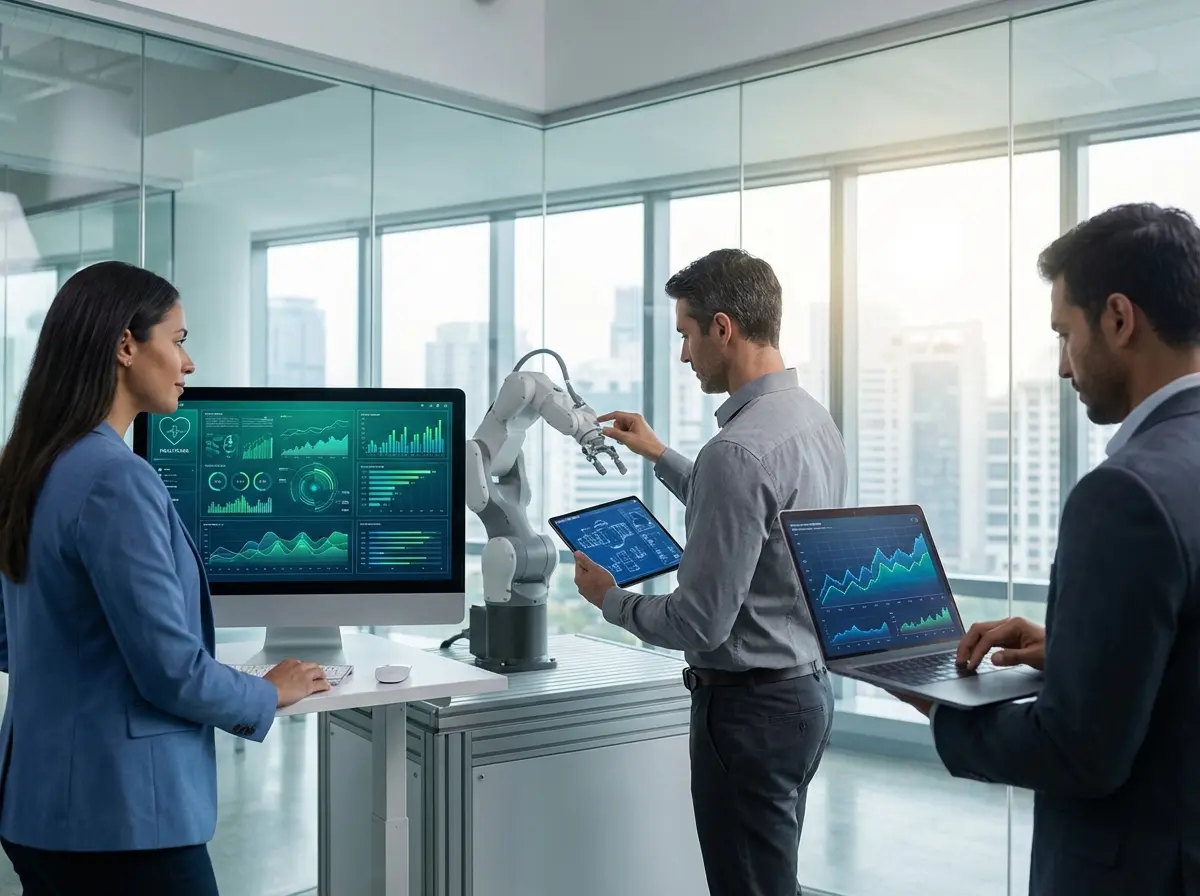
Every sector feels the impact of artificial intelligence, but some industries move much faster than others toward full machine learning integration. The adoption of these advanced algorithms completely transforms how professionals approach their daily responsibilities and long-term career goals. Let us look at specific sectors where AI job reshaping is highly visible right now.
Healthcare and Diagnostics: AI-Augmented Workflow
Medical professionals now use AI to analyze complex imaging and patient data rapidly, identifying patterns that might elude human observation. Radiologists rely on algorithms to spot early signs of diseases, though this technology does not replace the doctor in any capacity. Instead, it allows the physician to make faster, more accurate diagnoses while focusing on patient care.
Doctors can spend more time directly interacting with patients and discussing treatment options rather than performing manual data entry. The human element of bedside manner becomes even more valuable in an automated medical system that prioritizes efficiency. This synergy between human expertise and machine precision saves lives and improves overall healthcare outcomes.
Financial Services and Banking: Machine Learning Integration
Wall Street and main street banks heavily utilize machine learning for risk assessment, fraud detection, and automated portfolio management. Financial analysts previously spent hours crunching numbers and building foundational models from scratch, but algorithms now generate these baseline models in seconds. This shift allows analysts to focus on interpreting data and crafting high-level investment strategies for their clients.
They spend their energy advising clients on complex financial decisions while the algorithm handles the heavy mathematical lifting. This synergy produces better financial outcomes and higher client retention rates for banking institutions worldwide. The artificial intelligence workforce in finance is evolving to prioritize strategic advisory roles over manual calculation.
Software Development and IT: Generative AI Automation
Programmers are experiencing a massive shift in how they write and deploy code thanks to generative AI automation. Tools like GitHub Copilot assist developers by suggesting code snippets and identifying potential bugs automatically, which dramatically reduces debugging time. Software engineers can now dedicate their expertise to system architecture and innovative feature development rather than routine syntax.
Security professionals use AI to monitor networks for unusual activity and prevent cyber attacks in real-time. The technology elevates the entire IT department from basic maintenance to strategic innovation and proactive threat hunting. This transition ensures that technical teams can keep pace with the rapidly evolving digital landscape.
Marketing and Content Creation: Digital Transformation
Marketing departments use generative AI to brainstorm campaign ideas and draft initial copy, allowing for rapid experimentation. Copywriters leverage these tools to overcome writer’s block and generate multiple variations of ad text quickly for A/B testing. The human editor then refines the output to match the specific brand voice and emotional tone required for the campaign.
Graphic designers use AI image generators to create rapid prototypes and storyboards for clients, speeding up the initial approval process. The final polished product still requires a skilled human designer to execute properly and ensure brand consistency. This digital transformation allows creative teams to produce more work in less time without sacrificing quality.
Use AI tools to draft your initial emails, reports, or code frameworks. Always review and refine the output thoroughly to maintain your personal voice and guarantee factual accuracy.
Future of Work: How to Adapt Your Skillset for the AI Job Reshaping Era

Transitioning into an AI-augmented workflow requires a deliberate approach to skill development and a commitment to lifelong learning. You cannot simply wait for your employer to provide comprehensive training programs in this fast-moving environment. Taking initiative and actively upskilling gives you a significant competitive advantage in the future of work.
The modern workplace demands continuous learning and extreme adaptability from its employees to keep up with technological progress. You must actively seek out opportunities to experiment with new algorithms and software platforms that enhance your productivity. Follow these specific steps to prepare yourself for the ongoing AI job reshaping trend and secure your career.
How to Prepare for AI Job Reshaping
Audit Your Current Daily Tasks for Automation Potential
Review your weekly schedule and identify repetitive administrative processes in your workflow. Look for data entry, basic scheduling, or reporting tasks that modern algorithms could potentially automate.
Master Basic Prompt Engineering Techniques
Practice communicating clearly with generative AI tools to get the exact outputs you need. Experiment with different phrasing and context structures to understand how the model interprets your instructions.
Focus on Soft Skills and Upskilling for the Future
Enhance your emotional intelligence, complex problem-solving, and leadership capabilities immediately. These deeply human skills become your primary value proposition as machines handle more technical tasks.
Prompt Engineering and the Rise of AI-Adjacent Roles in the Artificial Intelligence Workforce
As traditional jobs transform, companies actively create entirely new positions to manage intelligent systems and oversee digital transformation. You might notice job boards filling up with titles that did not exist five years ago, reflecting the changing needs of the market. Organizations need humans to oversee, train, and maintain the algorithms driving their business operations and customer interactions.
Harvard Business Review emphasizes that managing AI effectively requires strong human oversight to ensure ethical standards are met. Without proper guidance, artificial intelligence models can produce inaccurate or highly biased results that damage brand reputation. Businesses are hiring specialized professionals to prevent these technological failures and ensure data integrity.
Prompt engineering has become a highly sought-after skill across various tech sectors and creative industries. These professionals specialize in crafting precise instructions that guide generative AI models to produce high-quality, relevant outputs. They understand the nuances of how different models interpret language and context to achieve specific business goals.
This role requires a blend of technical understanding, linguistic skills, and creative problem-solving abilities to be truly effective. A good prompt engineer can reduce AI hallucination rates and improve output efficiency dramatically for their organization. They essentially act as translators between human intent and machine execution, bridging the gap in the artificial intelligence workforce.
- New career paths are emerging specifically to manage and train artificial intelligence systems.
- Prompt engineering combines linguistic skills with technical knowledge to optimize AI outputs.
- Human oversight remains critical for verifying data quality and maintaining ethical algorithms.
Data validators and trainers also play a crucial role in the modern tech ecosystem by ensuring model accuracy. AI models require massive amounts of high-quality data to function correctly and provide reliable outputs for end-users. Human workers must review, categorize, and verify the information feeding into neural networks to prevent errors.
This careful oversight prevents algorithms from generating false information or hallucinating incorrect facts during operation. AI is only as good as the data it trains on, making human verification a cornerstone of the industry. These validation roles provide essential quality control for enterprise-level artificial intelligence systems across all sectors.
As these technologies mature, we will likely see even more specialized roles emerge across the global economy. Corporate structures will adapt to include departments dedicated entirely to artificial intelligence integration and management. Preparing for these new career paths now gives ambitious professionals a distinct advantage in the evolving job market.
Frequently Asked Questions
Will AI completely replace human workers?
While AI will automate specific tasks, it is highly unlikely to replace entire professions. Most jobs require complex problem-solving, empathy, and physical adaptability that machines currently lack. Workers who learn to use AI will likely replace those who refuse to adapt to the AI job reshaping trend.
What skills are most important for surviving AI job reshaping?
Emotional intelligence, critical thinking, and adaptability are currently the most valuable skills for the future of work. You should also develop a basic understanding of how to interact with large language models. Strong communication skills remain essential for managing both human teams and AI outputs effectively.
Which industries are safest from AI automation?
Jobs requiring physical dexterity in unpredictable environments are highly resistant to automation at this time. Plumbers, electricians, and construction workers face very little threat from current AI technology. Additionally, roles requiring deep human empathy, like therapists and social workers, remain highly secure from generative AI automation.
Do I need to learn how to code to work with AI?
You do not need formal programming skills to utilize modern AI tools effectively in most professional roles. Most new platforms use natural language processing, meaning you communicate with them using plain English. However, understanding basic logic and system architecture will help you get better results through prompt engineering.
How can I start using AI in my current job?
Begin by identifying the most repetitive, time-consuming administrative tasks in your daily routine that could be automated. Experiment with basic AI tools to draft emails, summarize long documents, or organize schedule data for better efficiency. Always verify the output before sharing it with colleagues or clients to ensure accuracy.
Conclusion: Embracing the AI Job Reshaping Transition for the Future of Work
The integration of artificial intelligence into the workplace represents a massive opportunity for proactive professionals to redefine their value. AI job reshaping changes the nature of daily work, eliminating drudgery and elevating human potential to new heights. You have the chance to redefine your career by mastering these powerful digital tools and leading your organization’s transformation.
The professionals who adapt quickly will find themselves highly valued in the modern economy and the artificial intelligence workforce. Resisting this technological wave will likely leave you at a significant disadvantage in your industry as competitors move faster. Instead, you should actively seek out ways to incorporate machine learning into your regular workflow to maximize your impact.
Focus on developing your emotional intelligence, strategic thinking, and complex problem-solving abilities to stay ahead of automation. These distinctly human traits will remain highly valuable long after algorithms master routine administrative tasks and data processing. Companies desperately need leaders who can balance technological efficiency with human empathy to drive sustainable growth.
Your career trajectory depends heavily on your willingness to embrace continuous learning and adaptation in this new era. Explore internal training resources, take online courses, and experiment with consumer-level AI applications to build your skills. Check out our ultimate guide to AI productivity to continue your learning journey and stay informed. By staying curious and flexible, you position yourself perfectly for the future of work.